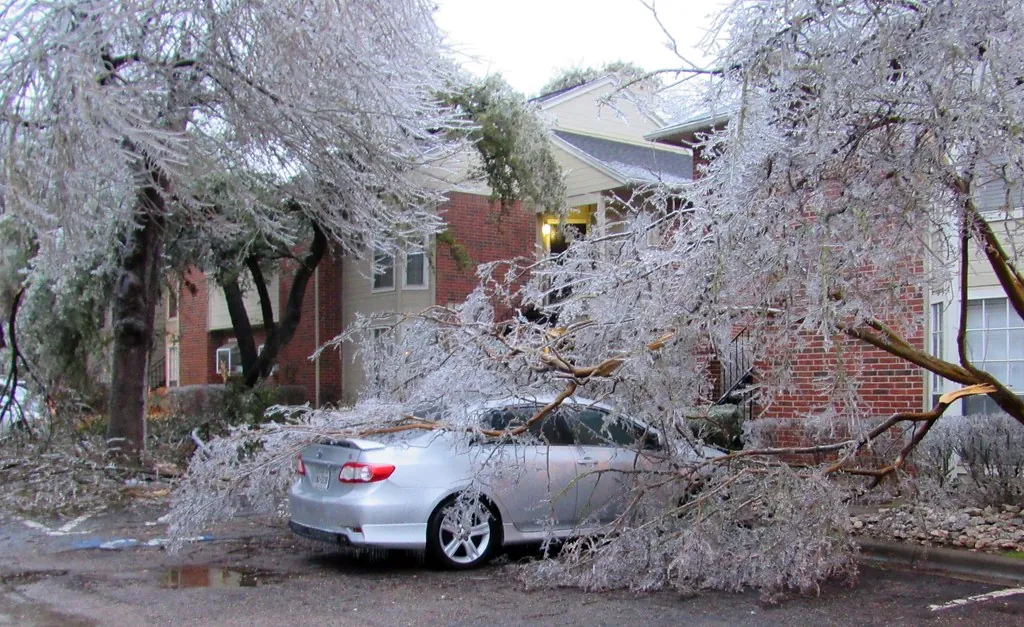
The winter side of Kansas claims
The December 2007 ice storm left large parts of Kansas without power and coated trees and lines with heavy ice. Arctic outbreaks, like the extended cold of February 2021, split supply lines and sprinkler pipes across the state. Neither looks like a typical spring hail claim, and estimates written for them often miss how far water travels.
Common freeze and ice disputes
- Burst pipes in exterior walls and crawlspaces where drywall, insulation and flooring all need replacement.
- Ice dams that push water into ceilings and wall cavities along the eaves.
- Limbs on roofs, gutters and fences after an ice storm, and the cost of removal from tight lots.
- Commercial sprinkler failures that soak multiple tenant spaces.
- Questions about heat maintenance in vacant or seasonal properties.
Moisture mapping matters
We document moisture readings, thermal images where helpful, and the full path of water. A scope that dries one room while wet insulation sits in the adjoining wall tends to show up again as mold later, and a panel can only value what has been documented.
Tree removal limits
Many homeowner policies limit tree debris removal to a set amount per tree and per loss. Appraisal can value the work properly, but those policy limits still cap what is paid.
Frequently asked questions
Is freeze damage covered if the house was vacant?
That depends on the policy’s conditions about heat and vacancy. It is a coverage question for your insurer or an attorney, not appraisal.
Who pays to remove a tree that fell on the house?
If the tree damaged a covered structure, removal is often covered up to the policy’s debris limit. Trees that fell without hitting anything usually aren’t.
How soon should I start drying?
Immediately. Policies require reasonable steps to prevent further damage, and fast drying limits mold. Keep receipts and photos.